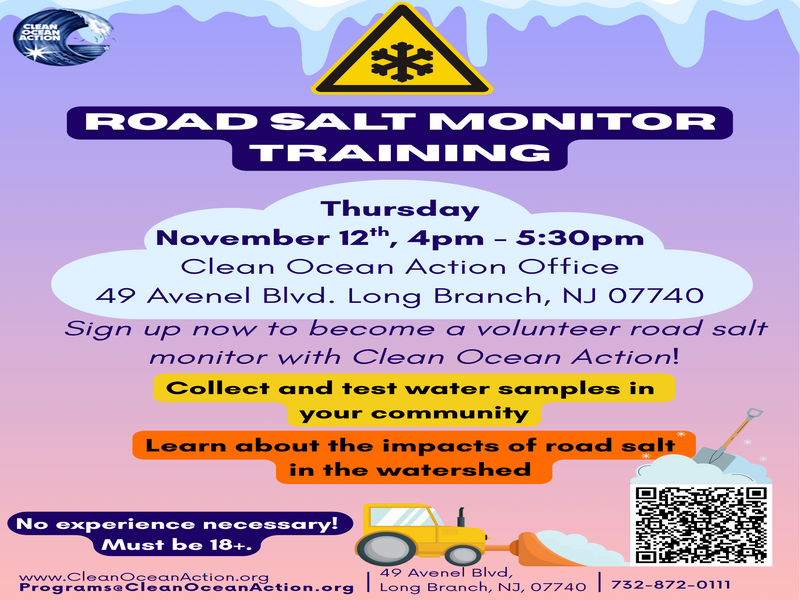
Road Salt Monitoring
A collaborative initiative to monitor chloride levels in local waterways to determine impacts from de-icing and road salt applications
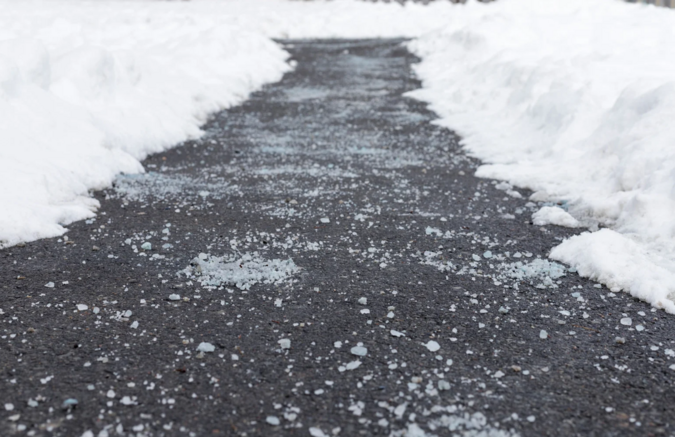
Every winter, we rely on road salt and other de-icing agents to help keep our communities safe and functional. Unfortunatly, excessive application of salt can be harmful to our ecosystems and infrastructure in the long term. This is why Clean Ocean Action started our Road Salt Monitoring Program.
COA has been a Community Partner under the New Jersey Watershed Watch Network’s Road Salt Impact Study since 2020. This study monitors chloride levels and provides much needed data on the health of upstream waterways in the Two Rivers watershed.
Some of the negative impacts of excessive road salt usage:
- Road salt is a pollutant negatively impacting water quality of surface and freshwaters, freshwater ecosystems, and damage private and public property
Deicing applications to roads/surfaces/walkways generate excess salt that enters our waterways through runoff
Fish and other wildlife in freshwater systems cannot tolerate a sudden influx of salt
Excess salt increases the salinity of freshwater resources, ends up in our tap water, and corrodes our pipes
Road Salt Best Practices
There are plenty of things you can do to help mitigate the impacts of road salt in the environment. This list provides a few examples of actions you can take:
General Best Practices
- Reduce the amount of salt applied
- Apply salt before wintry weather starts
- Remove snow from walkways before it has a chance to freeze
Find Alternatives to Salt
Avoid chemicals with chloride, especially sodium
- Calcium Magnesium Acetate
- Magnesium chloride – less corrosive than sodium chloride
Look for environmentally friendly products
The Safer Choice Standard is an EPA certification for products that are effective and environmentally friendly
Use salt alternatives/enhancers
Sand
Brine
Beet juice
Pickle juice
Share your knowledge!
Talk to your friends, family, and community members about the importance of limiting widespread salt application
Encourage your local or state government to explore alternatives to road salting while keeping roads safe